The main event of the trip. A grand two-week road trip through central and southern Mongolia, starting and ending in Ulaanbaatar. A country filled with beautiful landscapes, rich culture and incredibly welcoming people.
Contents
Ulaanbaatar
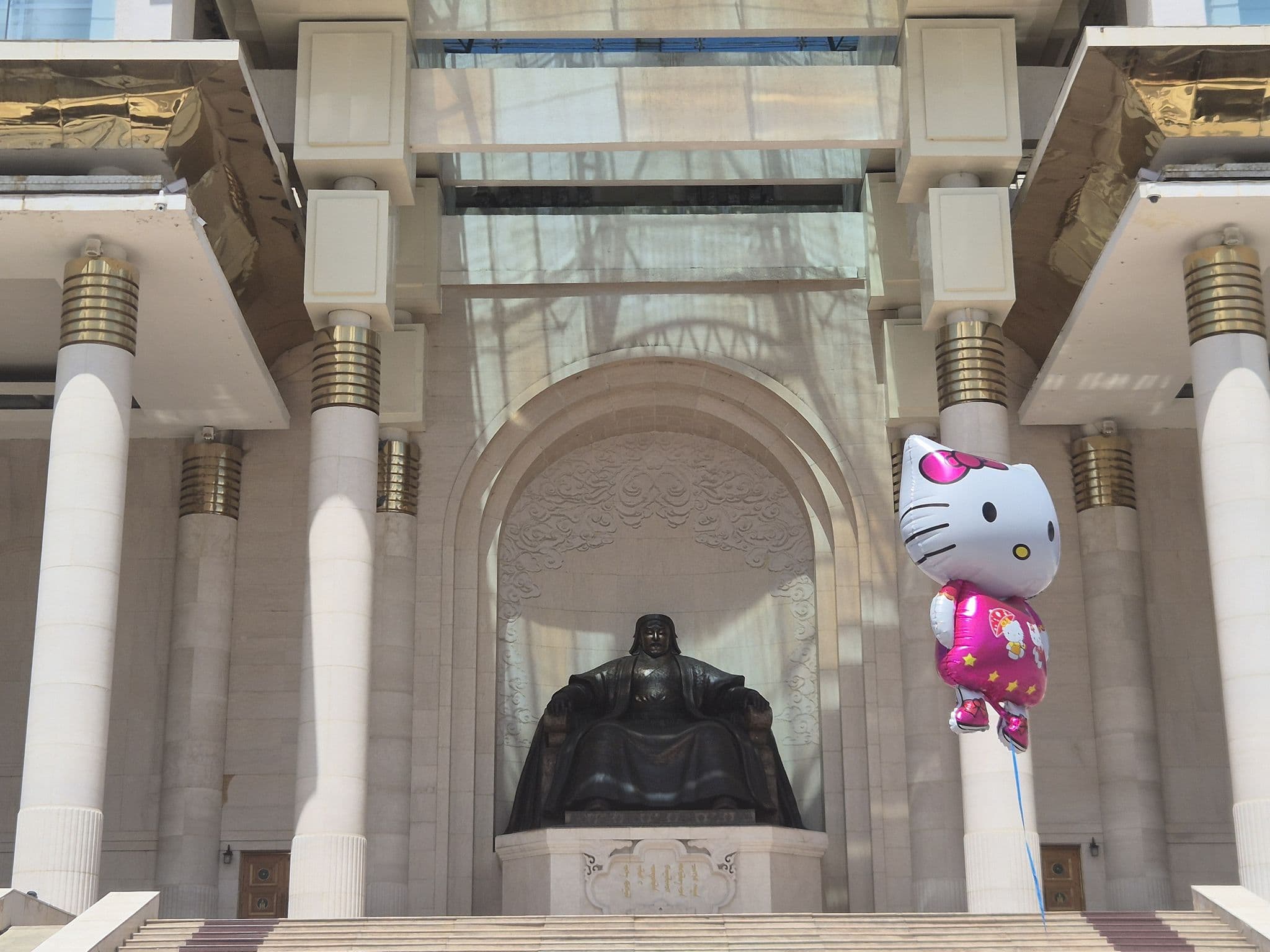
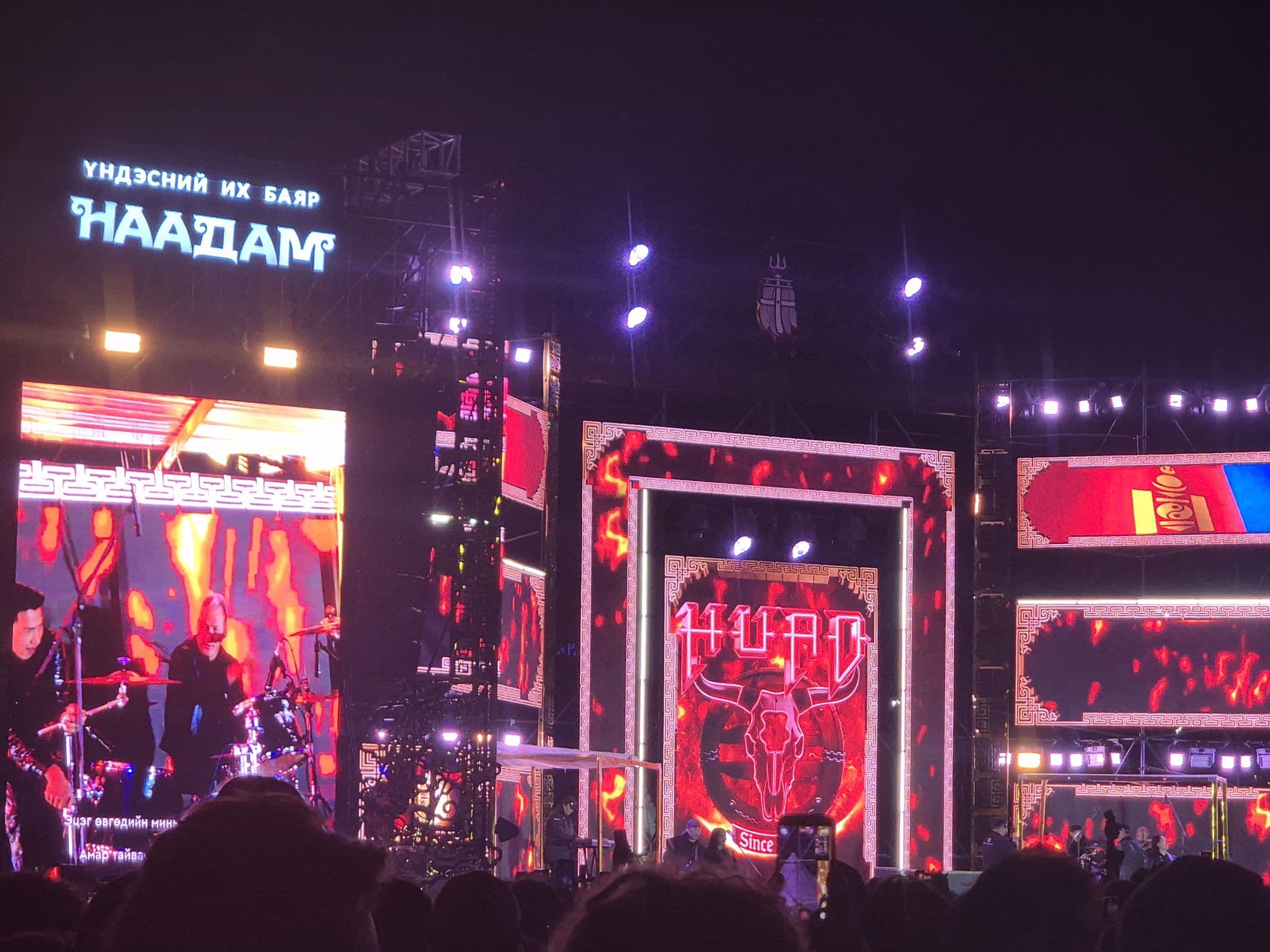
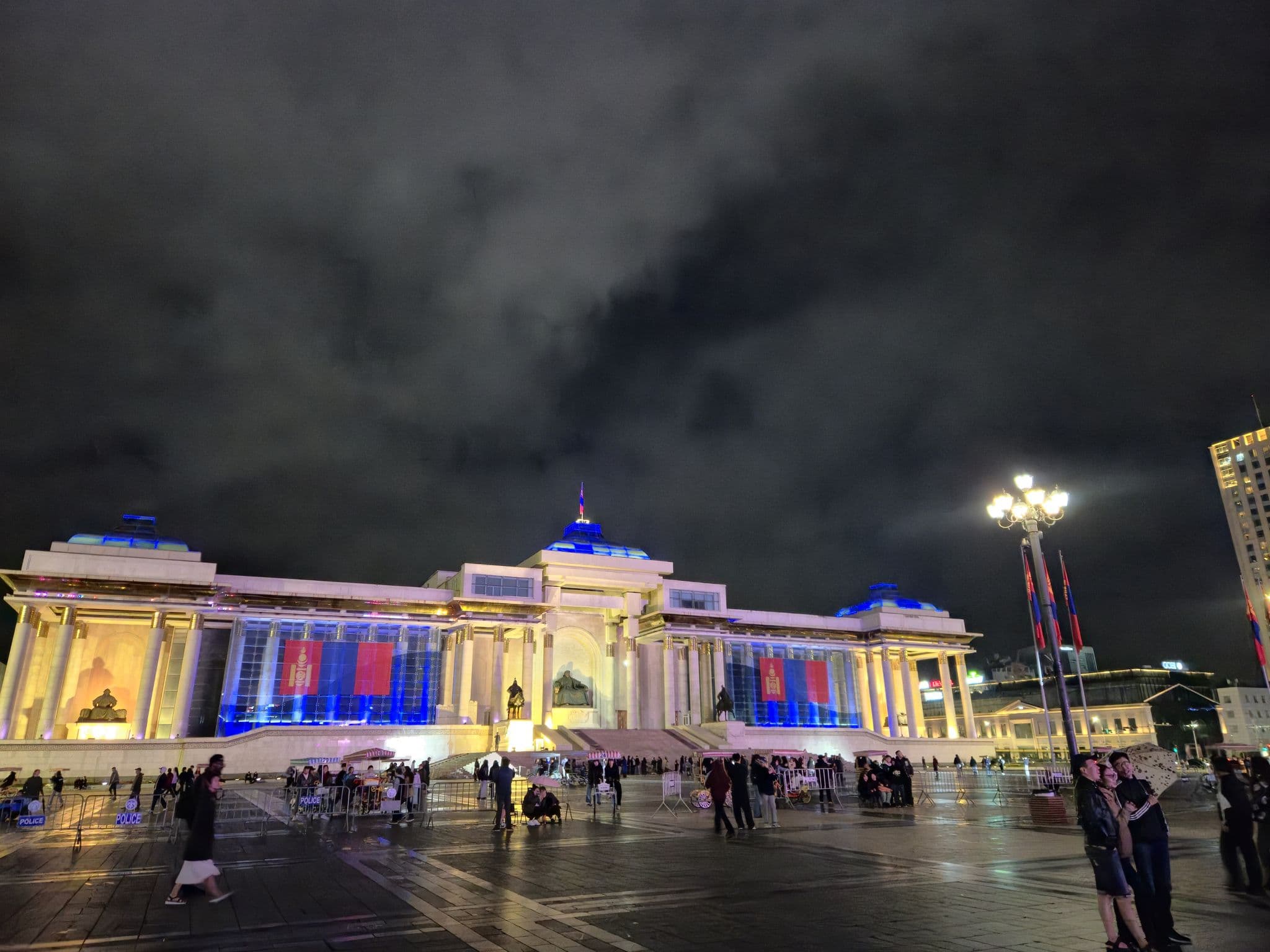
Ulaanbaatar was somewhat nicer than I expected. The city is focused around Sukhbaatar Square, where a lot of the main attractions are. We timed our trip to align with Naadam, the largest yearly festival in Mongolia, so we probably got to see Ulaanbaatar at its best time of year. The city isn't particularly large, but it has plenty of things to do to keep you busy for a few days. We went to the Chinggis Khaan National Museum, which takes you through the history of Mongolia as you climb the floors, with a huge golden statue of the great Chinggis Khaan himself at the top.
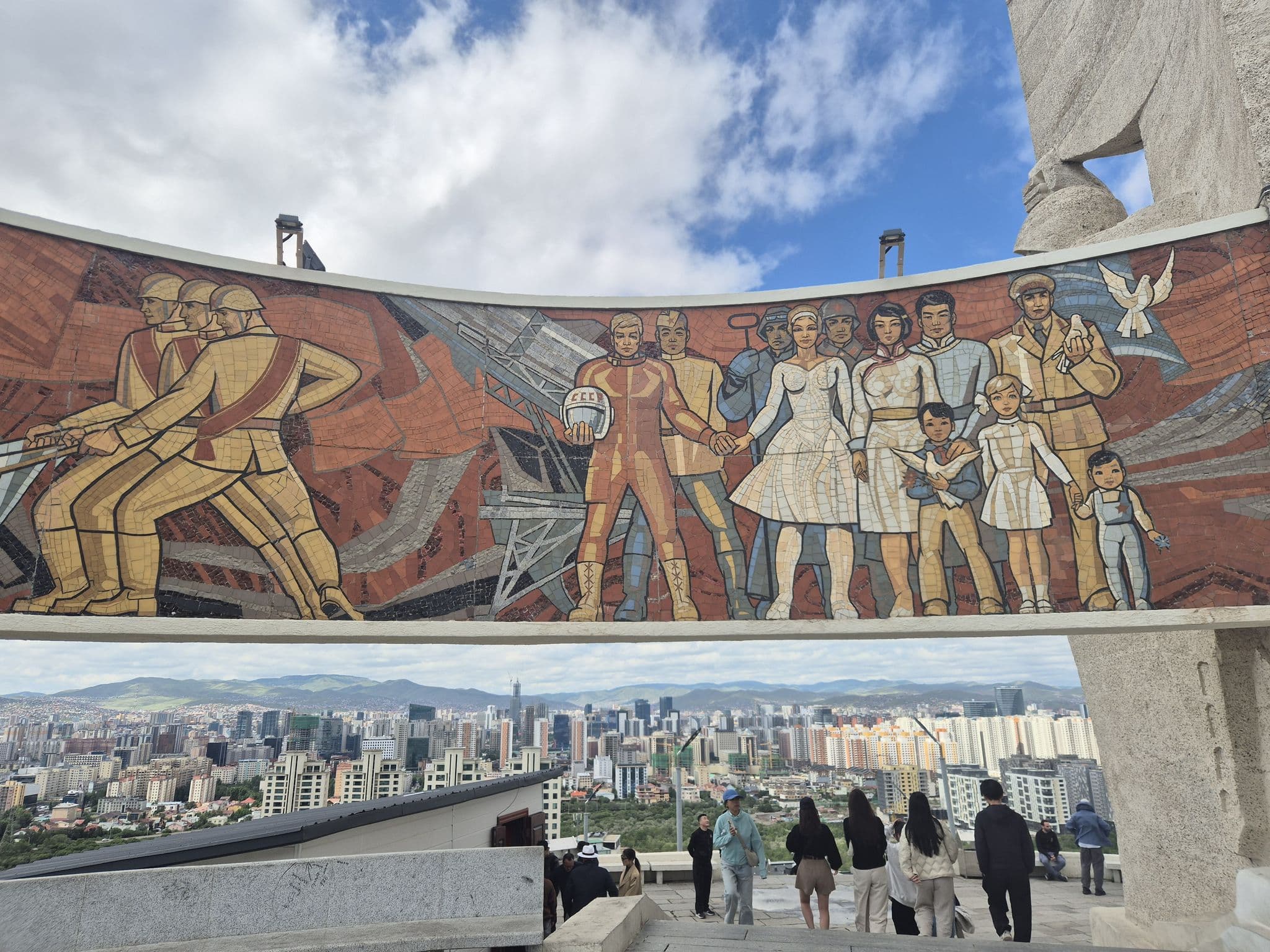
On one of the days we spent here we went for a massive walk from our hotel north of Sukhbaatar Square all the way to the Zaisan Monument on the southern edge of the city, stopping at the Choijin Lama Temple Museum, Ulaanbaatar Park, the National Sports Stadium where Naadam was in full swing, and the Bogd Khaan Palace Museum on the way. We couldn't get the UBCab app to work with a foreign phone number so we also had to walk back, but it was a beautiful day for it anyway.
The Off-Road Route
We spent most of our time in Mongolia driving around in a 78 Series Land Cruiser which we called "The Lion" (because it roared). While we saw a bunch of Toyota Priuses in places no Prius should ever have been able to reach, I would recommend getting an actual 4x4 car for off-roading, because some of the "roads" we followed did not deserve the name. We had a great time off-roading. Admittedly, probably 90% of the other tourists we saw had a Mongolian guide and driver, which is fair. But if you want the adventure and to save a little bit of money, self-driving is absolutely possible.
Best self-drive rental operator in Mongolia. Great vehicles, well-equipped and properly serviced, and the team is super helpful. Would not hesitate to book again.
Visit ↗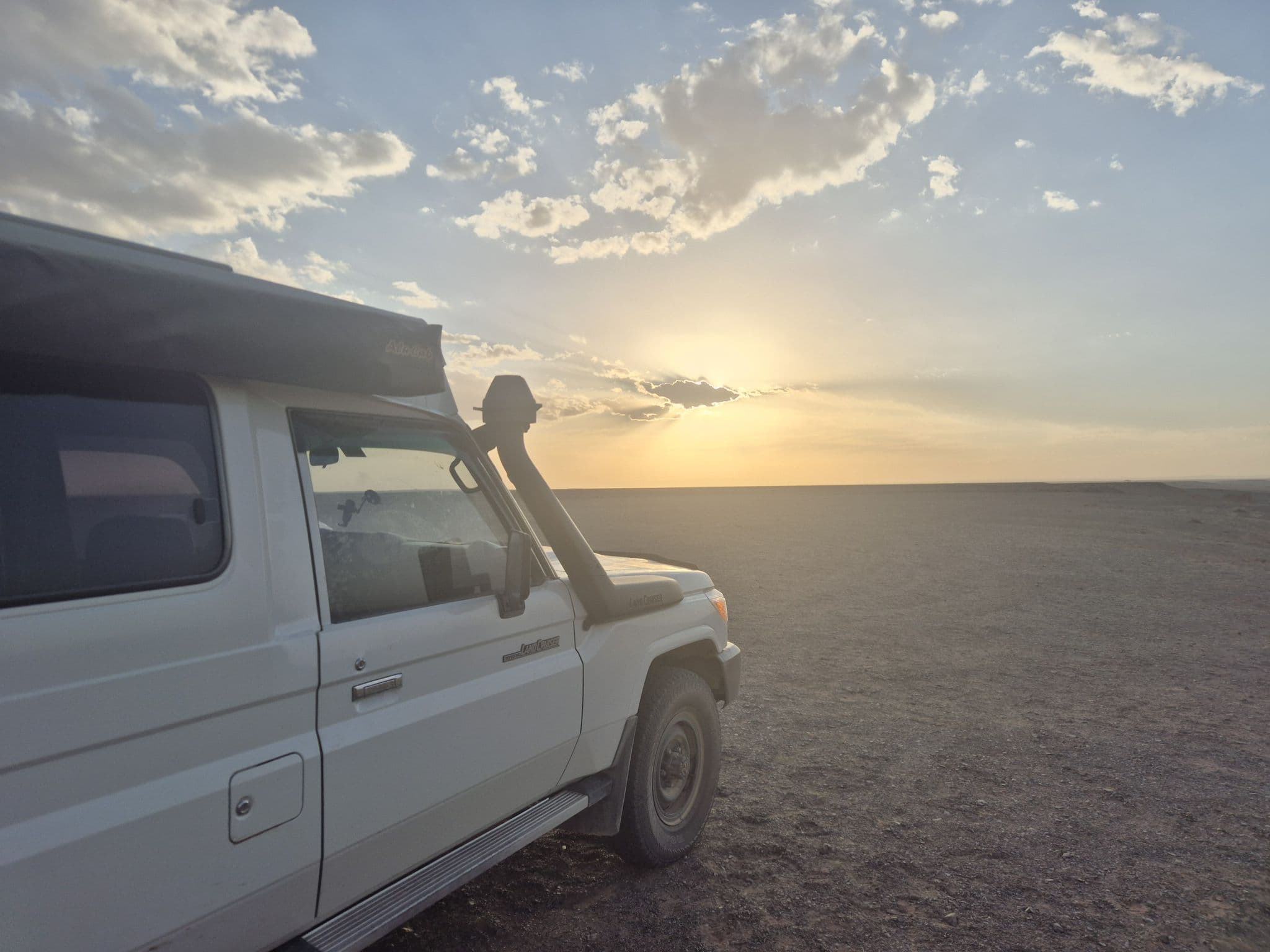
Gorkhi-Terelj National Park
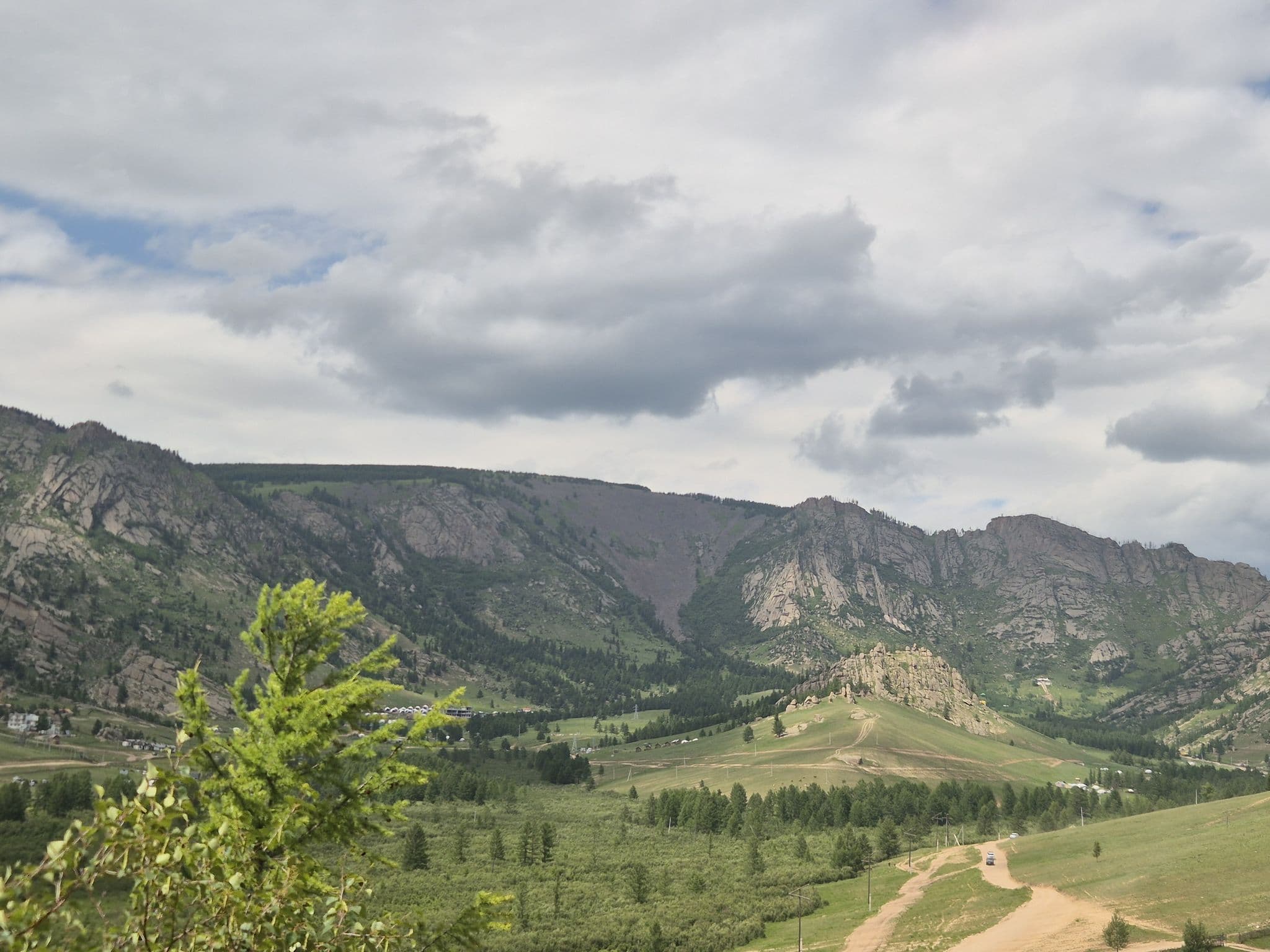
Gorkhi-Terelj National Park was our first stop outside of Ulaanbaatar, chosen specifically so we could figure out our gear without being too far away from civilisation if anything went wrong. While camping in Terelj we had a nearby family of local Mongolians wave us over to join them for dinner, a traditional stew called хорхог (khorkhog) made using superheated stones to cook meat and vegetables with water in a sealed container. This is one of my favourite memories of the trip: the food was delicious, and I will never forget the hospitality we were shown not only by this family, but by many others throughout our trip.
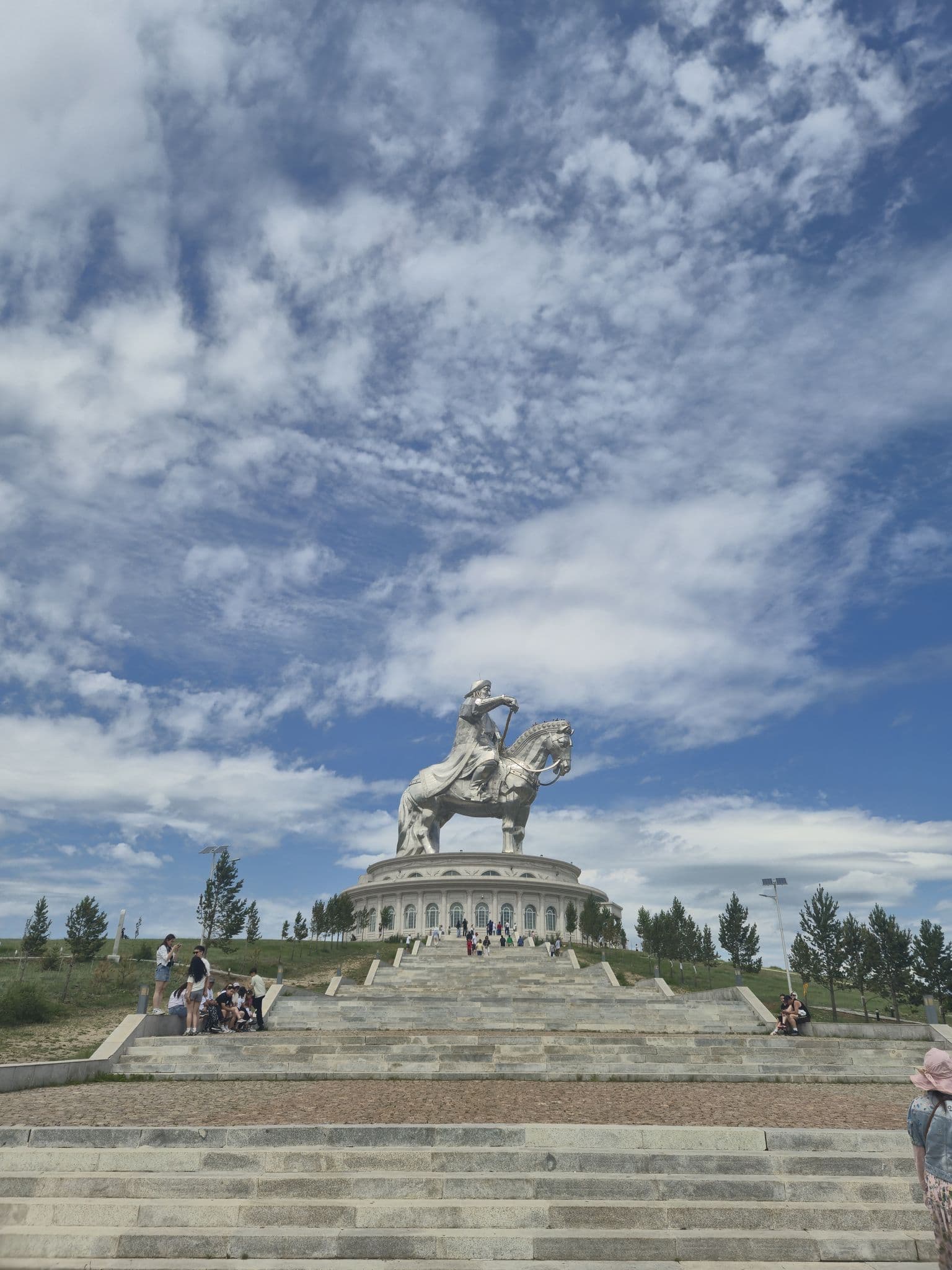
The turn-off to Terelj is not far from the largest equestrian statue in the world, the Chinggis Khaan Statue Complex. We each got photos holding eagles in front of the statue as if it wasn't already awesome enough.
Baga Gazriin Chuluu
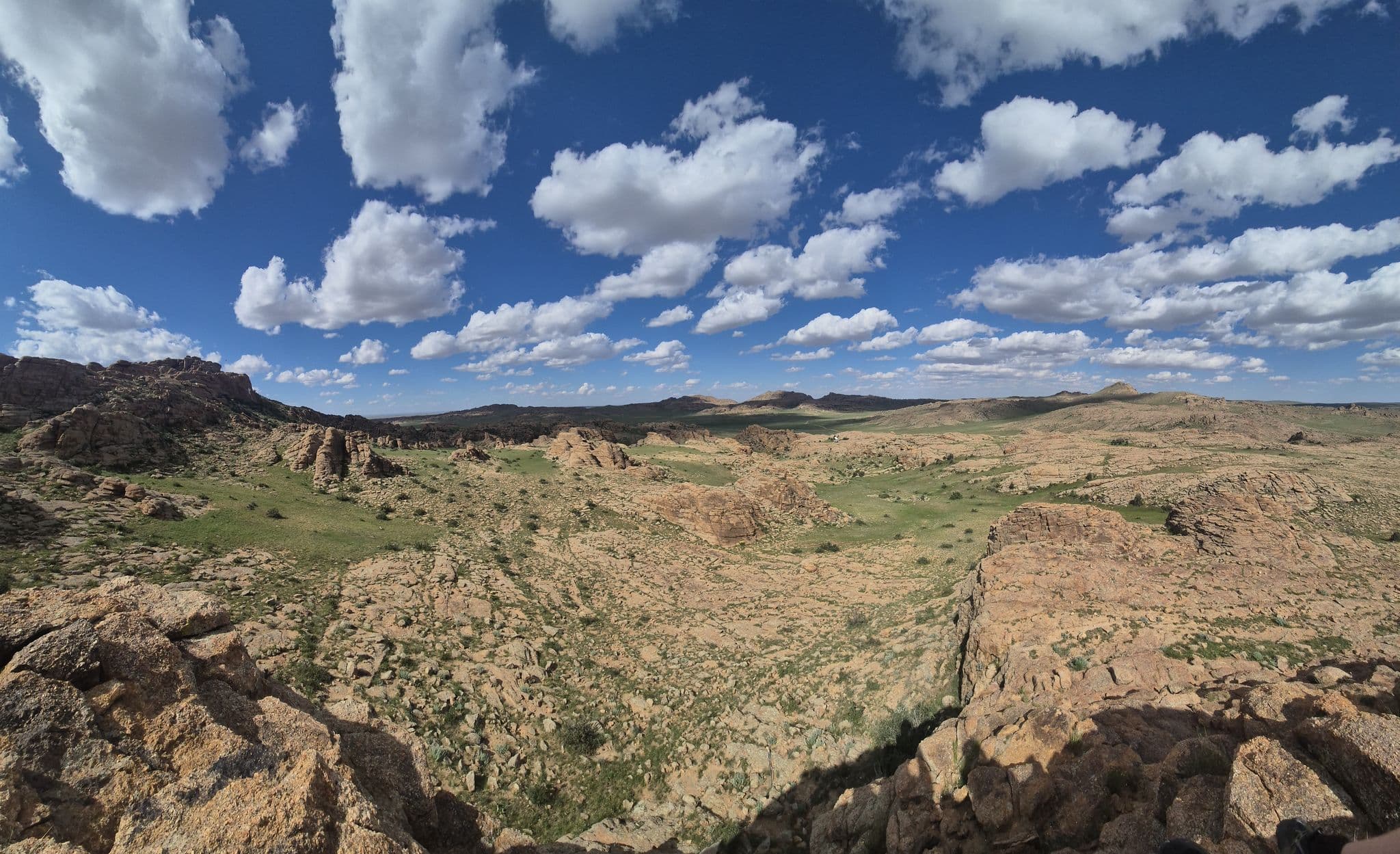
Getting here was our first major stretch of off-road driving, although some sections of the paved highway included their own challenges. The area is scenic and a great location for rock climbing, camping and general wandering around. It definitely makes for a good midway point between Terelj (or Ulaanbaatar) and Tsagaan Suvarga.
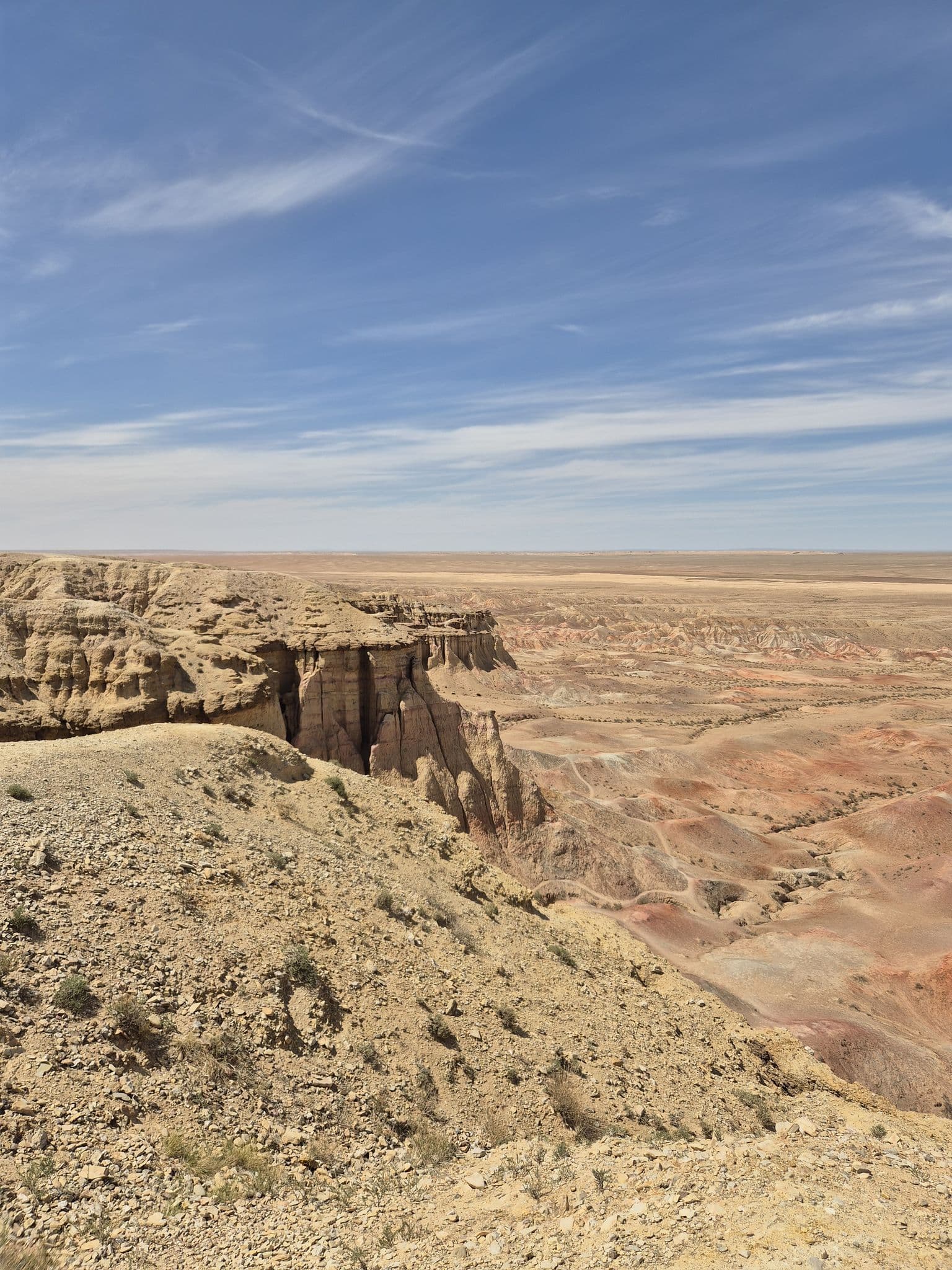
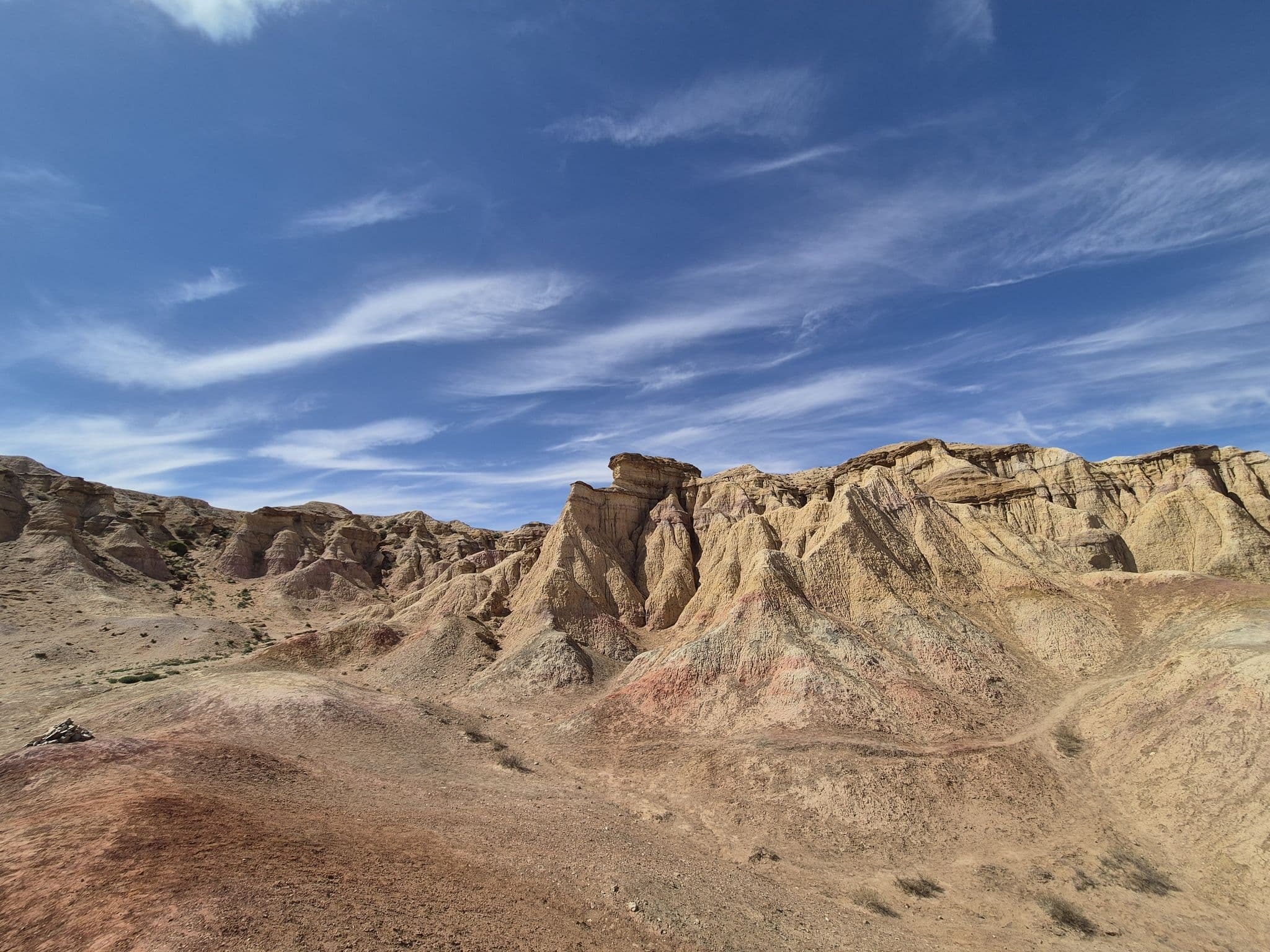
Tsagaan Suvarga | White Stupa
This was the first place we felt like we were in the desert. There is nothing but sand and rocks around the White Stupa for kilometres in every direction, and the midsummer heat was getting to us. Fortunately, The Lion came equipped with a shade sail and a fridge we'd stocked full of local beers, and once we remembered that, we were more than happy to tolerate the heat.
For the second time we had a Mongolian family join us for dinner, making use of our perfectly placed campsite to cook alongside us and chat and share stories. After they left, the solar lamp we'd parked up next to blessed us by luring out several native jerboas for us to marvel at. The little critters were too fast for me to take any decent photos of, but it was very cool to see some actual wildlife in the desert.
Dalanzadgad & Yolyn Am
Dalanzadgad is the capital of Ömnögovi Province. It's not a very big city, and there's not a huge amount to do there besides the Gobi Museum of Nature and Natural History, which is worth a look around. We used it as a rest stop before continuing on to some of the main attractions on our itinerary.
After the desert heat that hit us the day before, we decided it was time to spend a night in a hotel. This one is probably the nicest in Dalanzadgad, and a good spot to refresh before heading further into the desert.
Visit ↗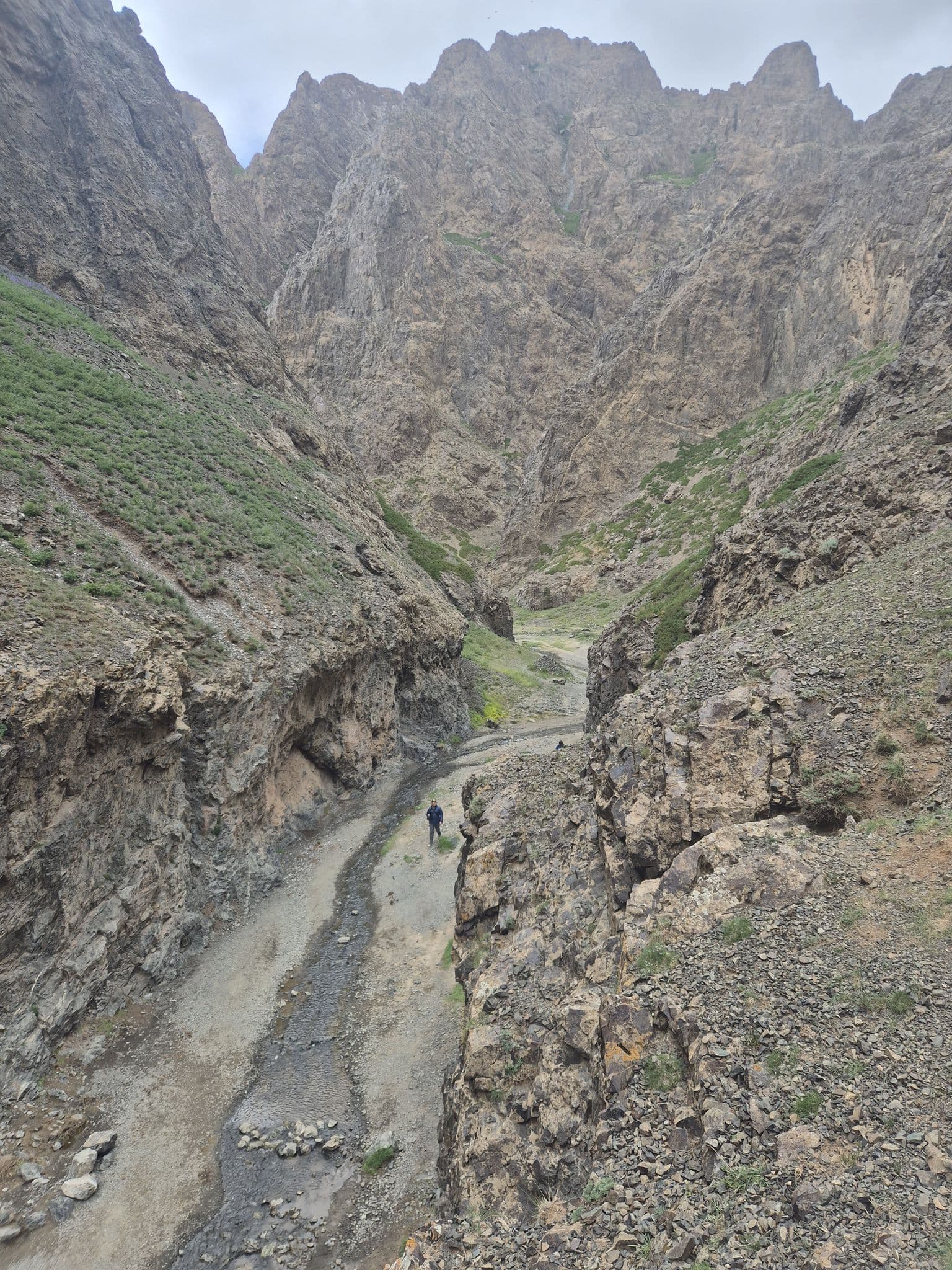
Not far from Dalanzadgad is Yolyn Am, a sheltered canyon that lets you forget you're in a desert for a while. There's a lot of small wildlife around and there is even ice in the canyon almost all year round.
Khongoryn Els | Singing Sands
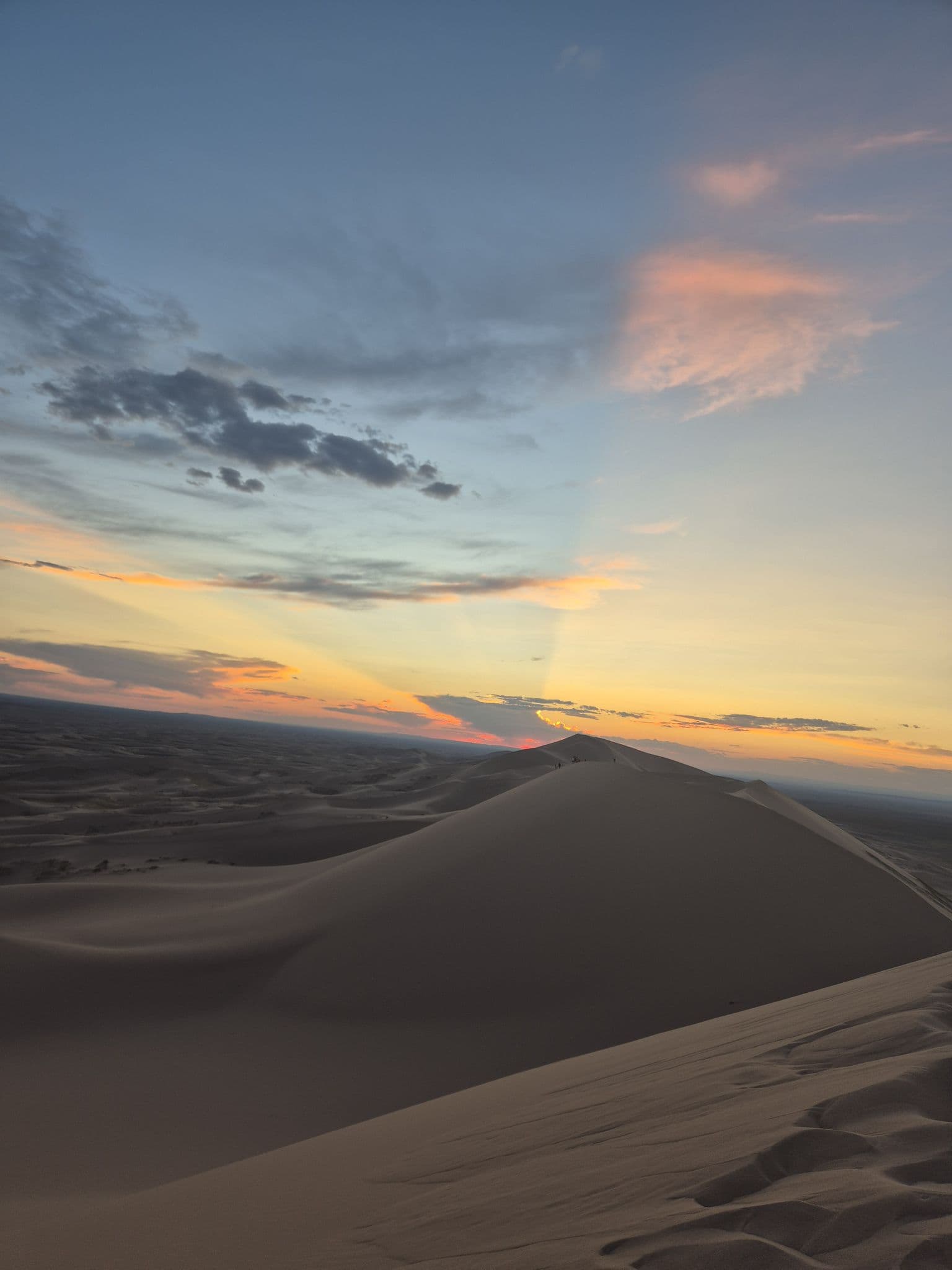
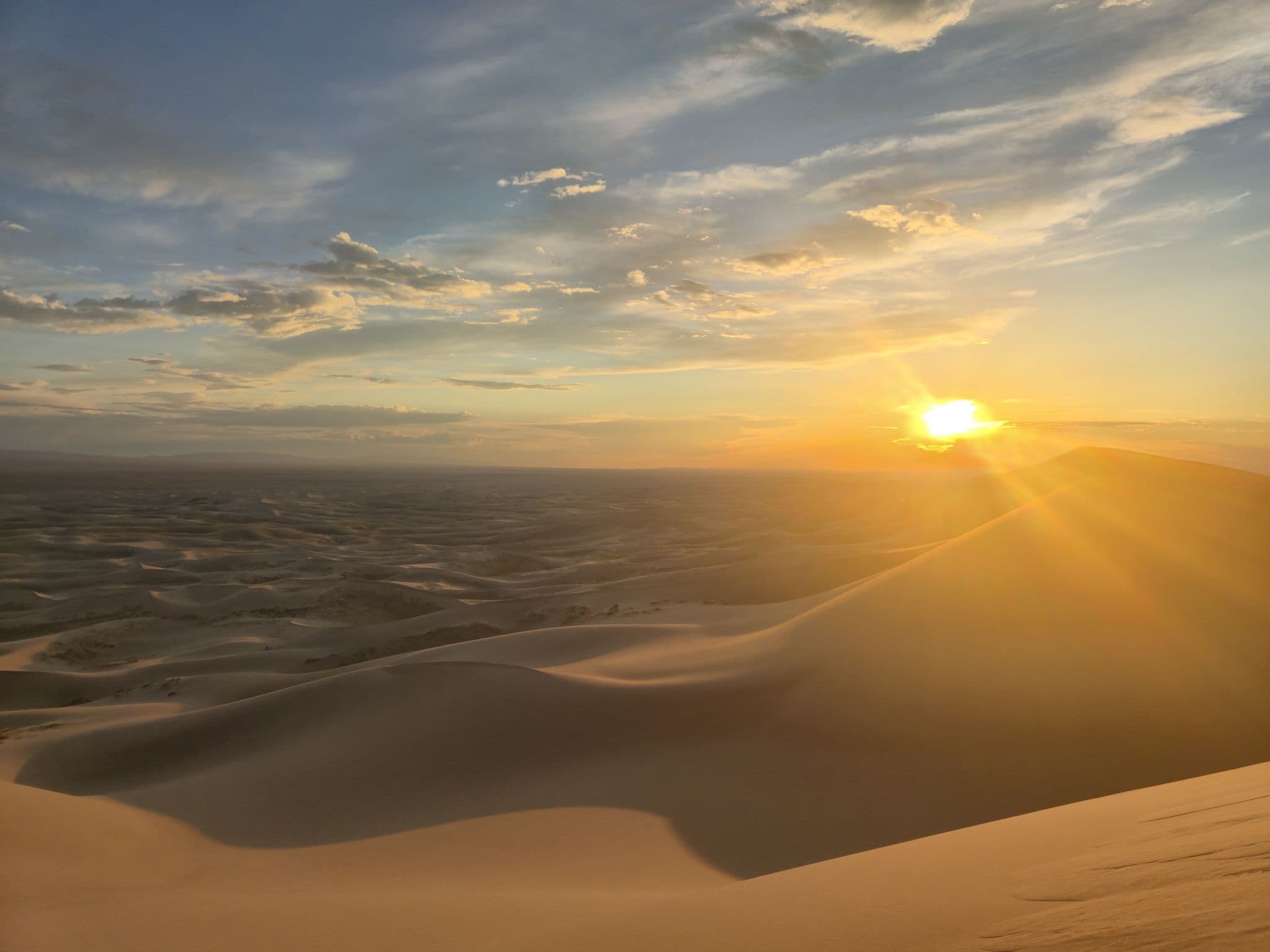
Khongoryn Els was one of the absolute highlights of this trip for me. The dunes are incredibly impressive, and the drive to get to them was actually a lot of fun, even if it was quite long. As you travel further the dunes just get bigger and bigger.
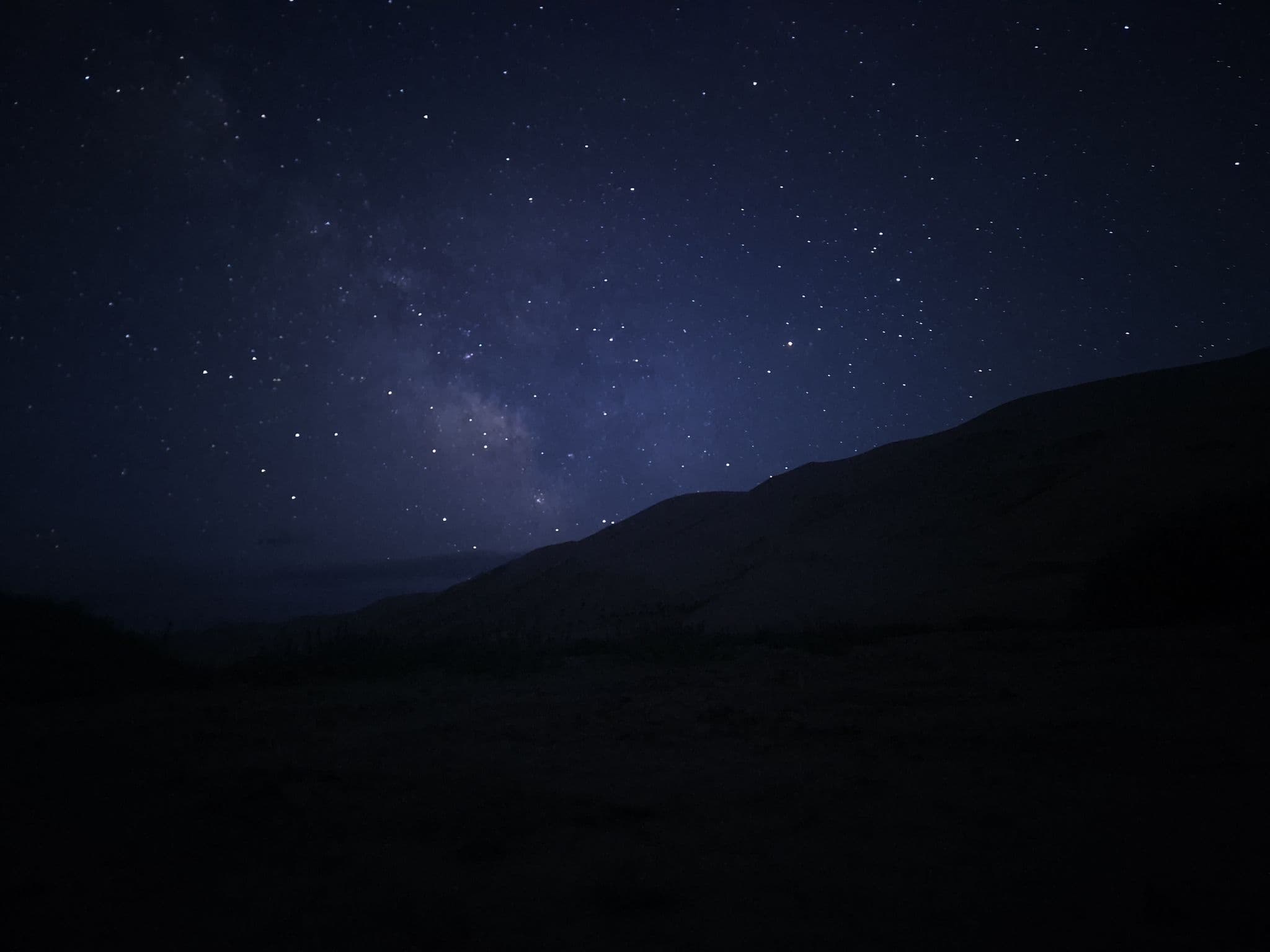
Climbing the dunes requires a major effort. The biggest dunes can be up to 300 m tall, and getting to the top is absolutely exhausting. We went up at sunset, once the sun had left the dunes and most of the heat was gone. Even so, we were barely able to move by the time we reached the top, but that just allowed us to really soak in the view while we recovered. Going back down the dunes is way easier than going up. You can also bring a toboggan up and slide down.
Bayanzag | Flaming Cliffs
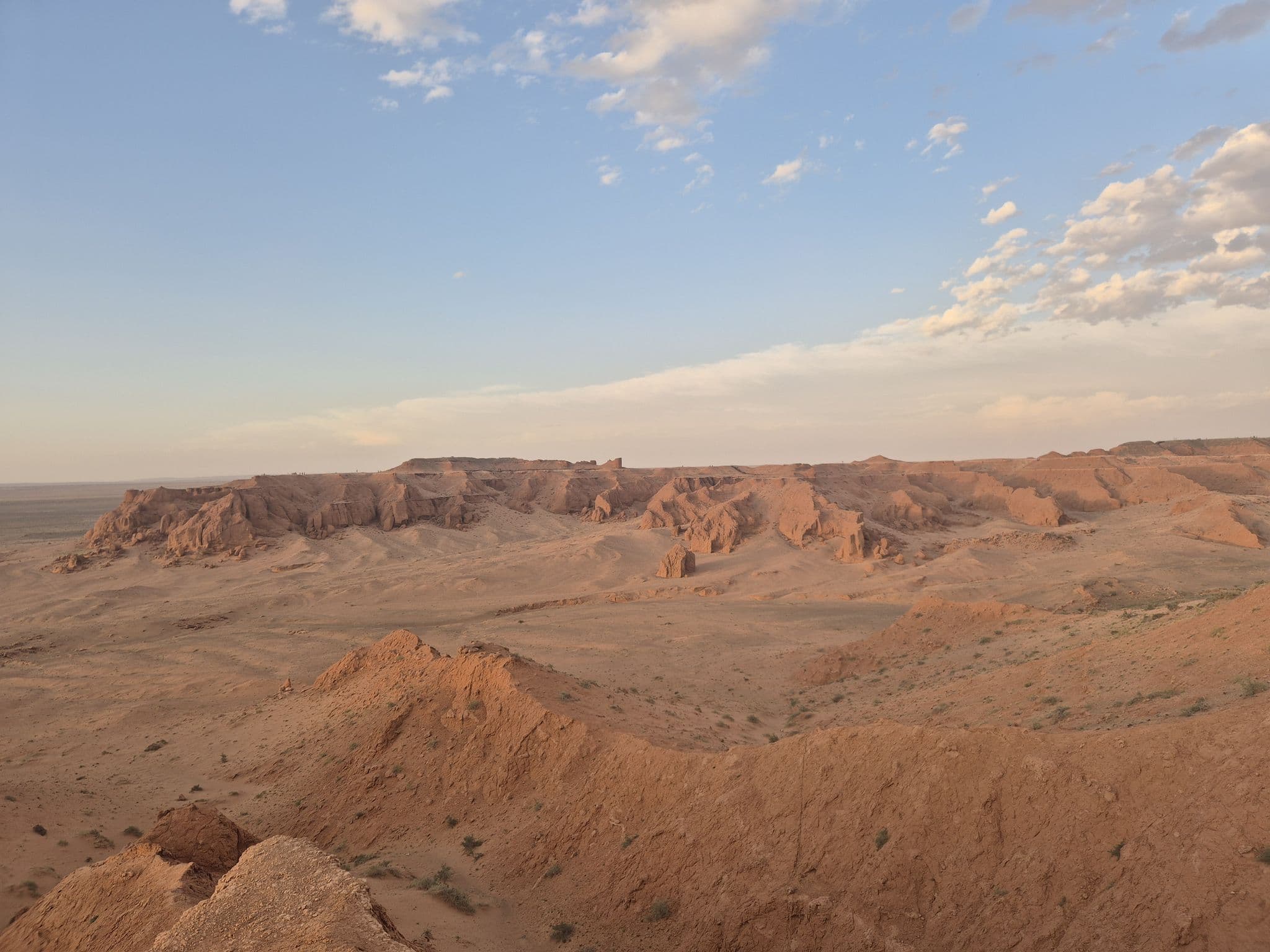
Once again we found a need for shelter and cold beer in the desert, but this time we were hiding from the wind and the stinging sand it brought with it rather than the sun. Still, this was one of the most scenic places we visited, and it felt a bit like we were on Mars.
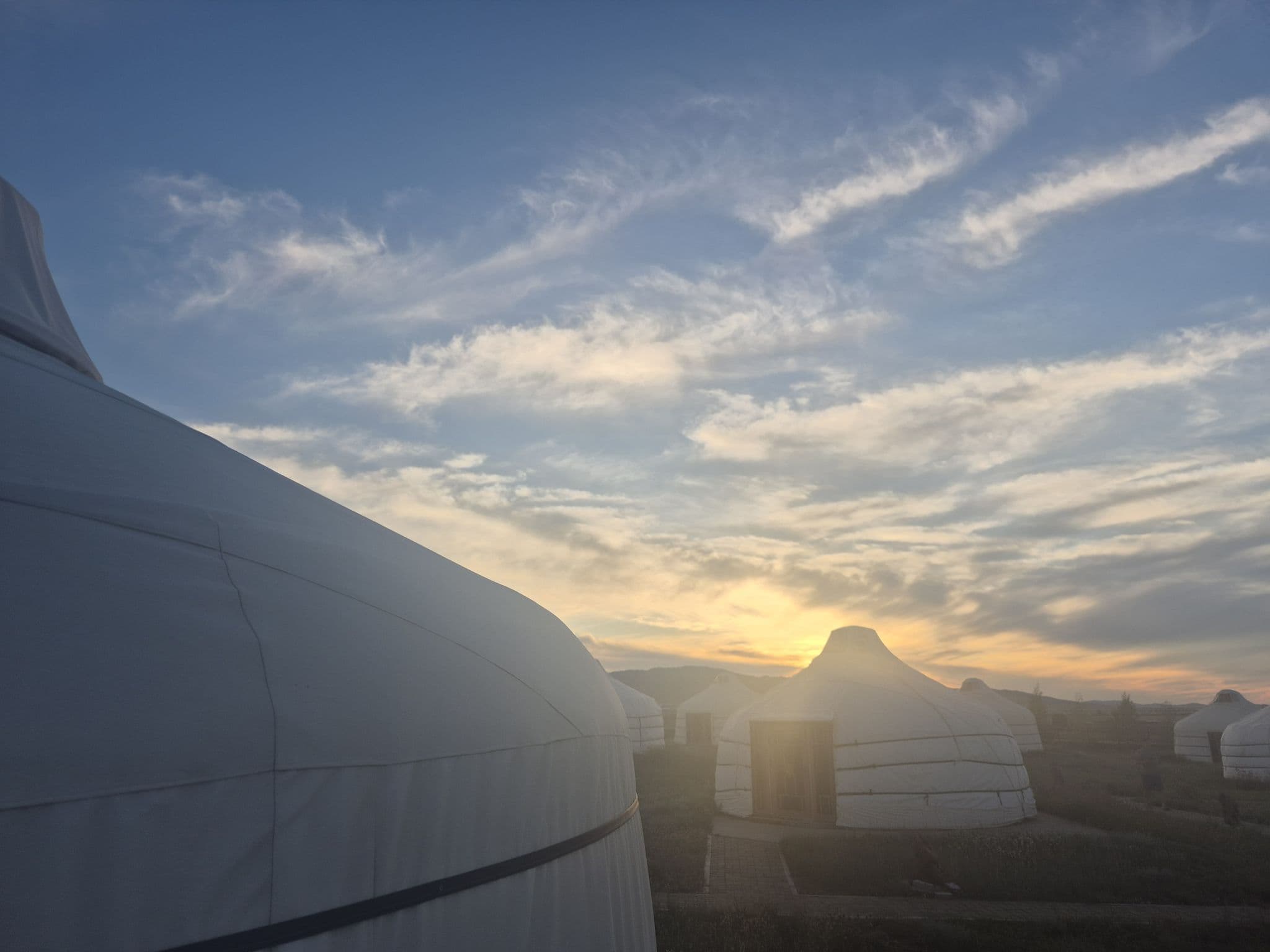
Our campsite looking out over the cliffs also happened to be the spot that all the tourist vans came to once the wind died down to watch the sunset, when the Flaming Cliffs live up to their name. We had a good opportunity to meet and interact with other tourists for a while, until they all went back to their cosy ger camps and left us to our tent.
Ongiin Khiid & Kharkhorin
The drive out of the Gobi was probably one of the hardest sections of the trip. From Bayanzag to Ongiin Khiid was easy enough, and we stopped to have a look around the ruins there before pushing on. From Ongiin Khiid we knew we needed to cross the river to get to Arvaikheer, and spent a while wondering whether a crossing would actually exist - until we rolled up to a brand-new concrete bridge at Saikhan-Ovoo, built well after our map was printed. The road to Arvaikheer on that side of the river is horrific, though, and we definitely felt the need to reward ourselves with another hotel stay once we arrived.
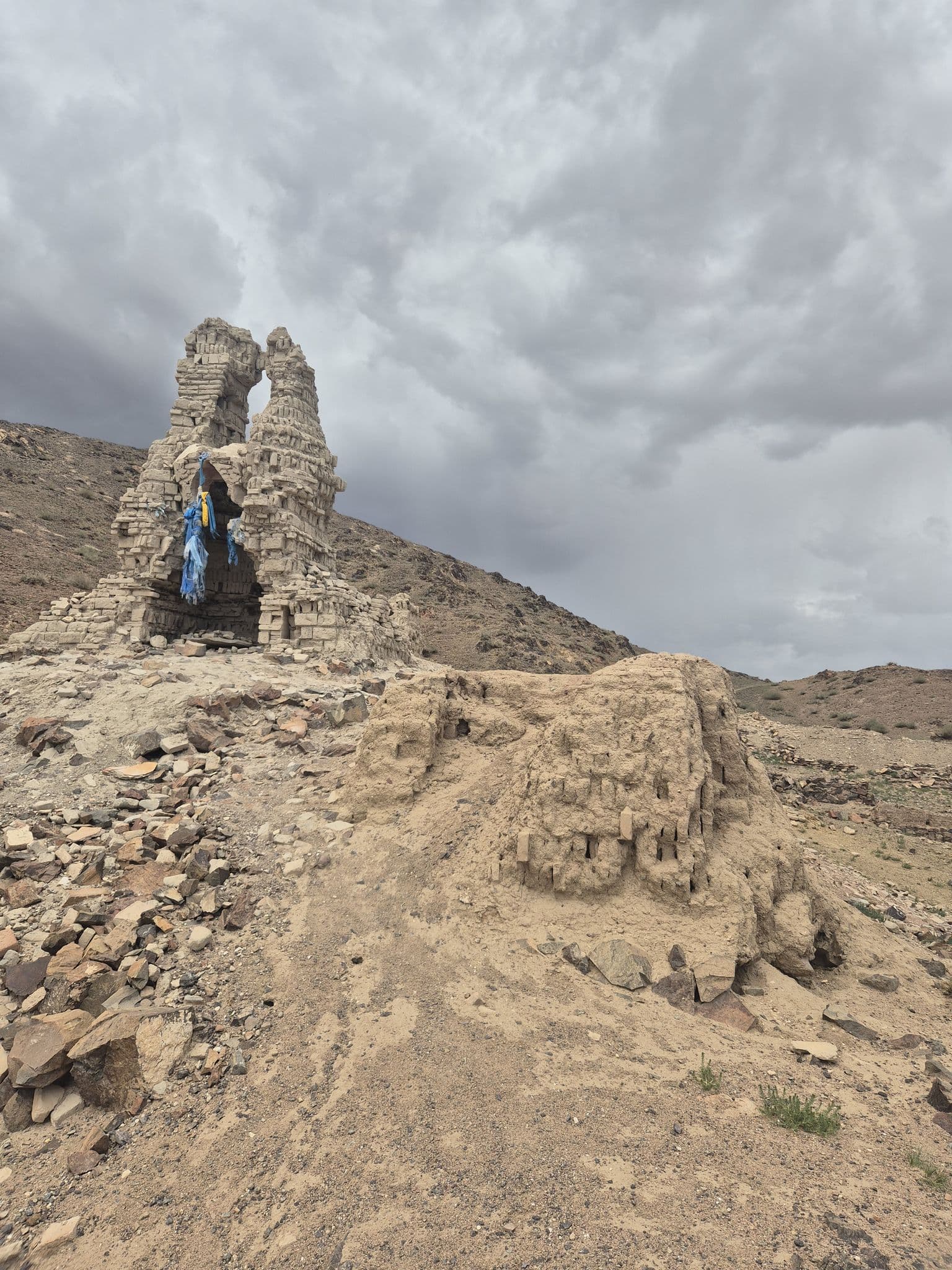
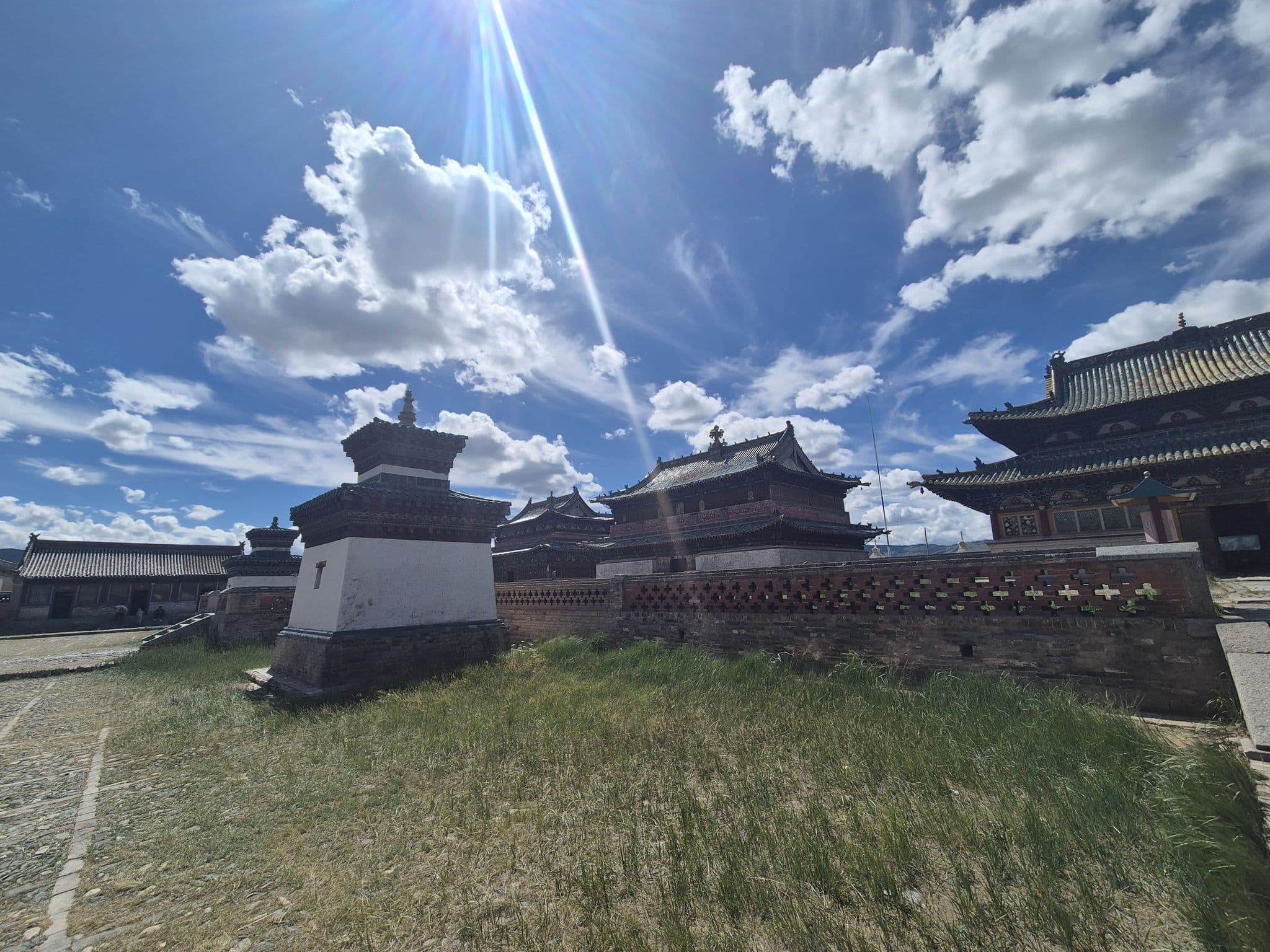
Arvaikheer was comfortable enough, but there was nothing there we wanted to see so we pressed on to Kharkhorin the next day, where we were able to take a good look around Erdene Zuu Monastery, with a very enthusiastic if partly incomprehensible guide, and then explore the abstract ruins of ancient Karakorum, which took quite a lot of imagination to picture, compared to the far more recent and sombre ruins of Ongiin Khiid.
Orkhon Valley
We stayed a night in the Orkhon Valley not far from Kharkhorin, intending to head back into the city the next day to fetch supplies for repairs (duct tape) before heading deeper into the valley. When we returned to the valley we had two French hitchhikers with us, who told us about a yak festival in Bat-Olzii at the far end of the Orkhon Valley. We took them on a rather rough off-road track down the valley, including a couple of small river crossings and some backtracking until we discovered that a brand-new paved road went all the way to Bat-Olzii, and wasn't on any of our maps. That made the rest of the trip much easier. We dropped the boys off to search for the yak festival and continued on our way to Ulaan Tsutgalaan.
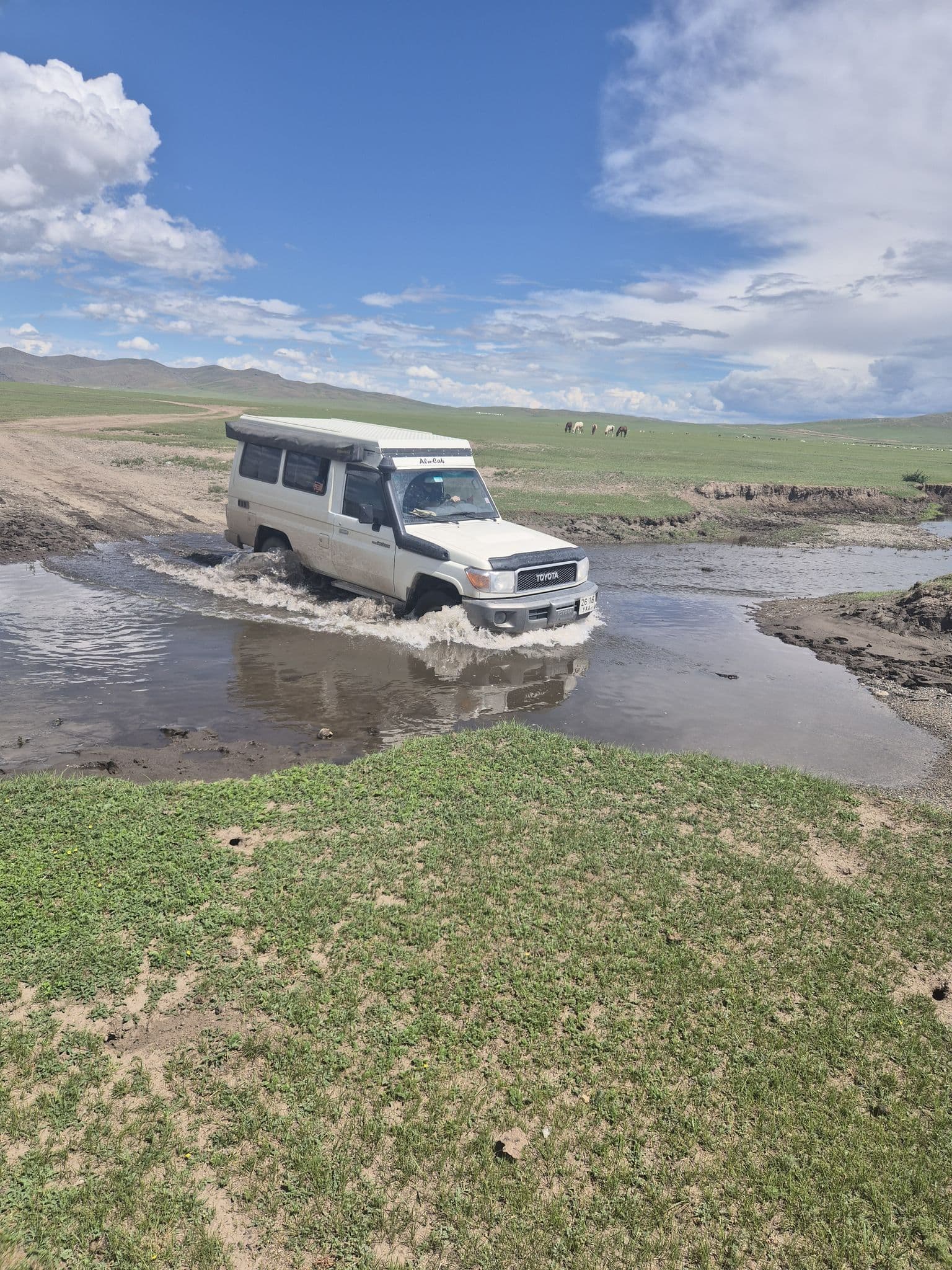
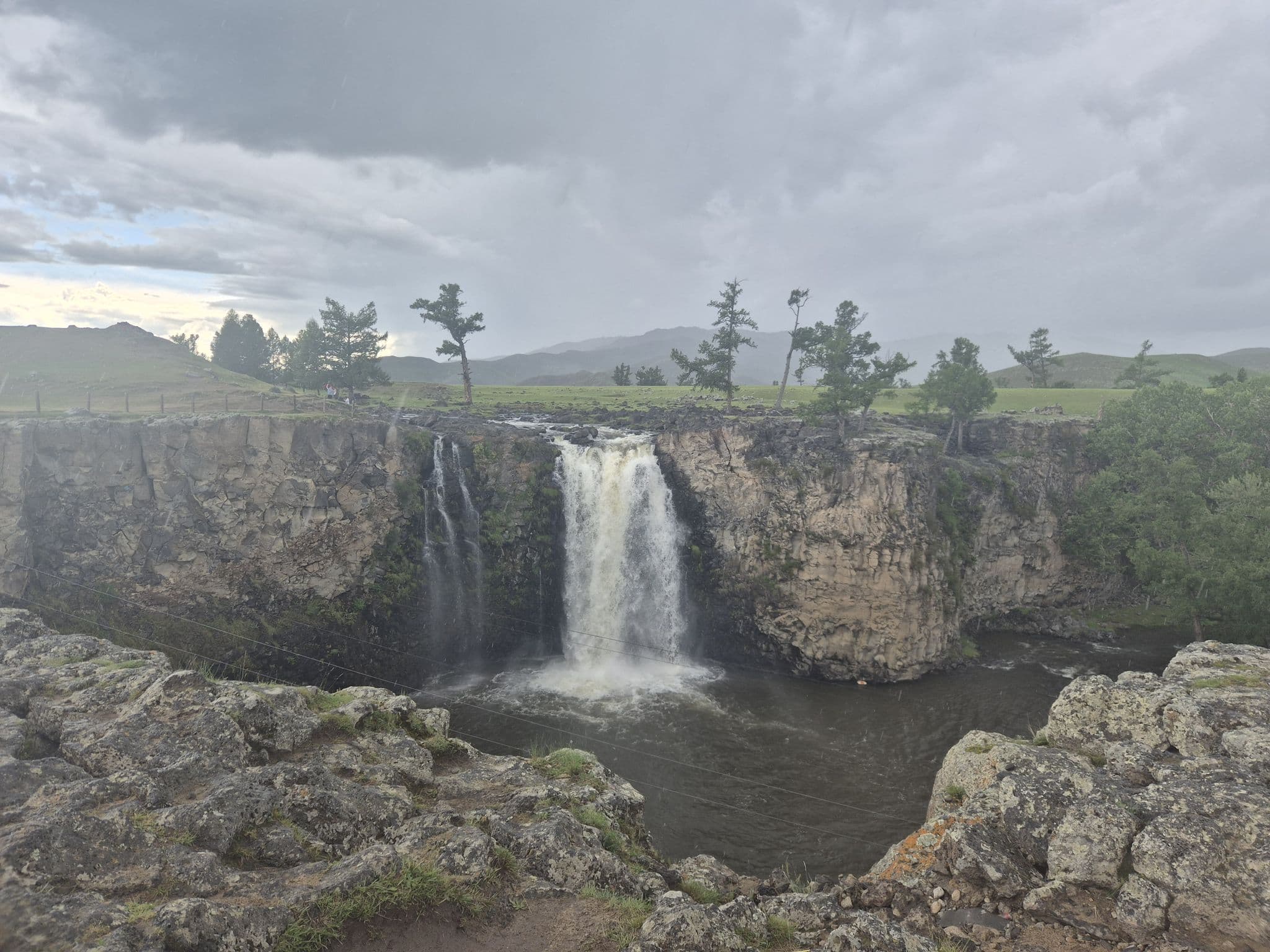
Coming from New Zealand, Ulaan Tsutgalaan wasn't a hugely jaw-dropping waterfall, and the road to get to it from Bat-Olzii was easily the worst road we'd driven on so far, but it was still worth going to see and we had the bonus of an amusing interaction with a local who tried to ferry us from the carpark to the waterfall on his motorbike, which we were clearly not going to fit on.
After going to see the waterfall we crossed the river again, hoping there would be a bridge (and there was, another brand-new one!), to get ourselves close to the hiking trail to Tovkhon Khiid for the next day's mission. This was actually one of the more interesting places we stayed. It wasn't as scenic as some of our other prime campsites, but we got a real feel for the absolute freedom of just camping anywhere in Mongolia, seeing the herders in action in the distance and livestock wandering up to our campsite in the night.
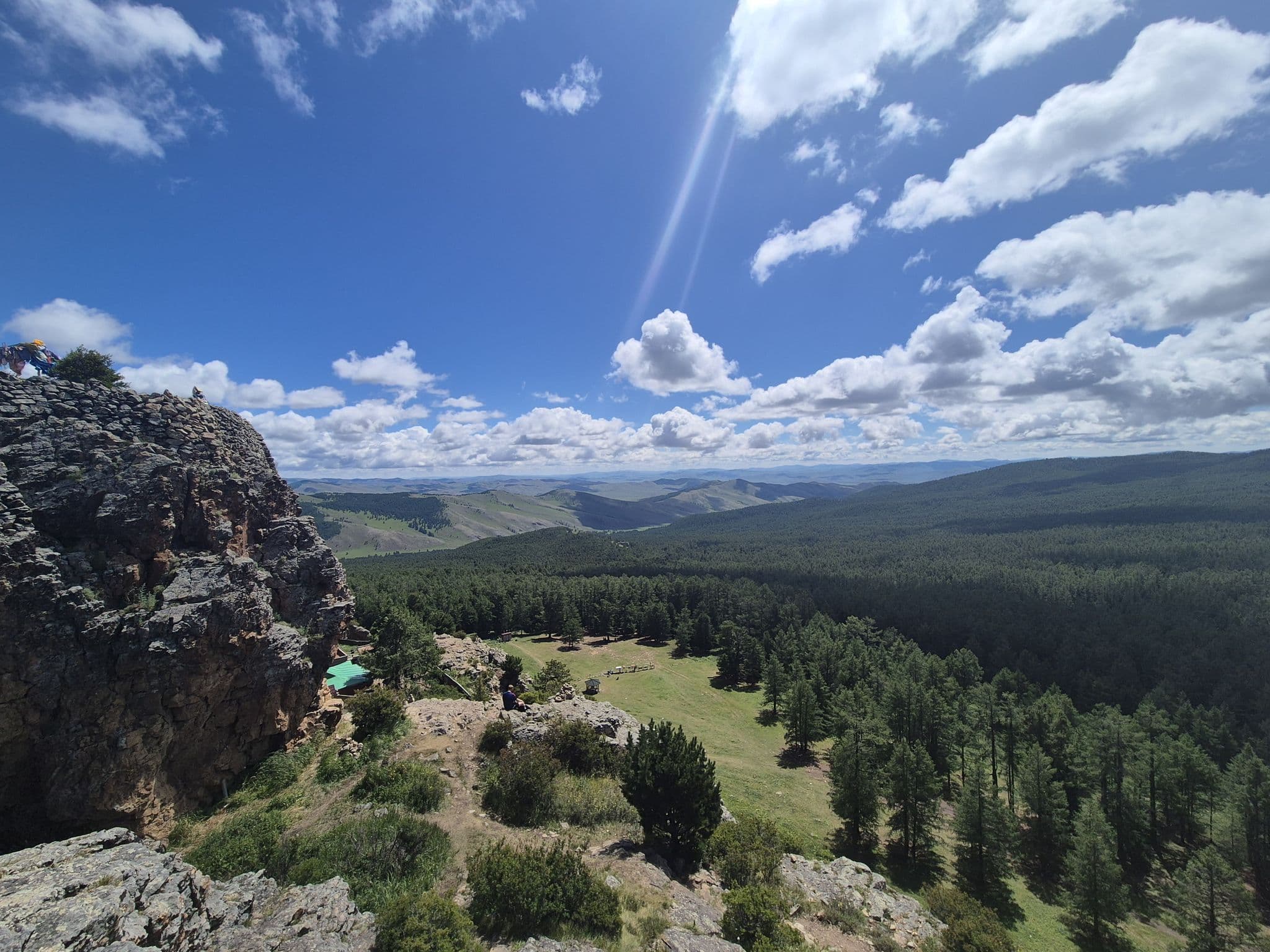
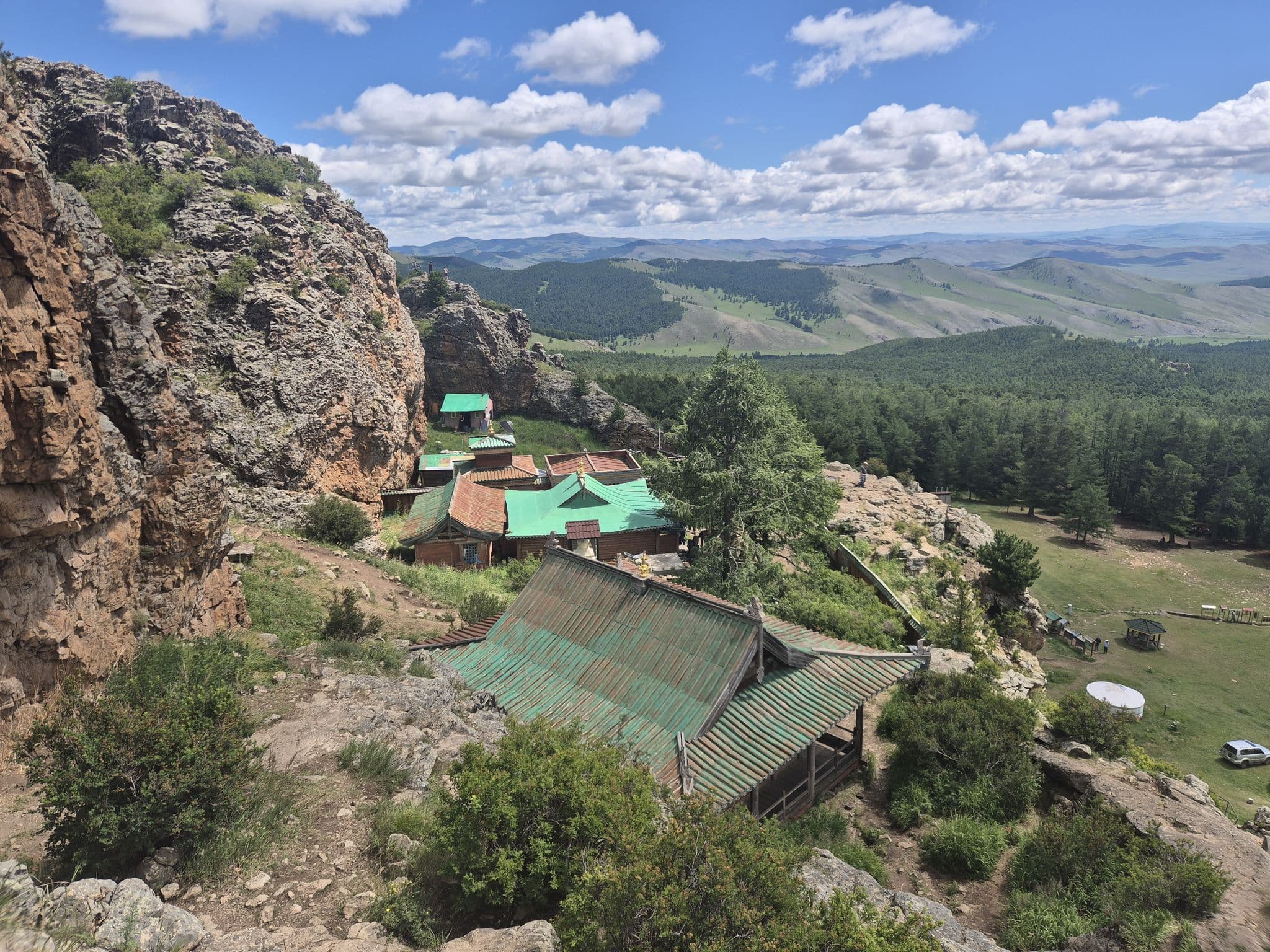
The next day we did the hike up to Tovkhon Khiid, a relatively easy walk following a shallow incline that takes you quite high up to a modest-sized monastery in a stunning location. I would rank this hike among my favourite activities from the trip. It might seem harder to get to than most of the other places we went, but it was very achievable once you know the way.
Beautiful hike to a monastery with an amazing view. One of my favourite parts of the trip.
Getting Around
Mongolian people are super nice, but they shouldn't be allowed to drive. I'm not sure what it is about getting behind the wheel here, but drivers seem to lose all interest in self-preservation. Once you get off-road, other drivers are no longer your biggest concern. Unless you are Mongolian and willing to take your Prius into the desert, get an actual off-road vehicle. A guide and a driver are probably also worthwhile investments, but not strictly necessary. We actually rescued a van full of tourists, plus their guide and driver, from a dry sandy riverbed in our superior vehicle.
I do not recommend driving in Ulaanbaatar unless you're used to driving in chaotic cities. There are taxi services in Ulaanbaatar, but we were not able to get any of the local taxi apps to work, and had to get the hotel to call a taxi for us when we needed one. You probably need a local SIM card, not just an eSIM, and maybe a local bank account too (we don't know, we didn't get that far), if you want to use UBCab. Otherwise you can probably get away with just walking everywhere.
Gallery
Reflections
What would I do differently?
Would I go again?